Cart
0
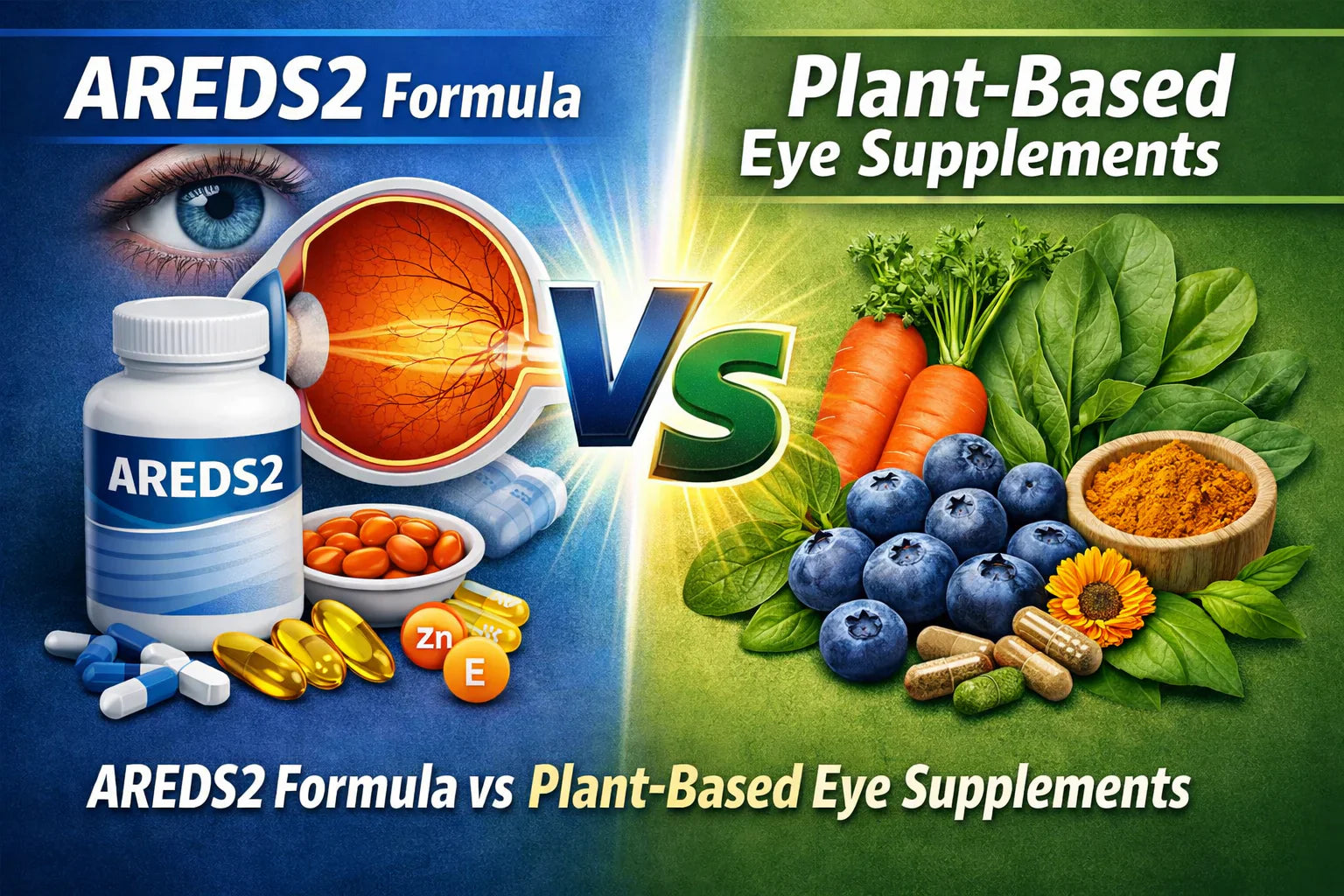
AREDS2 Formula vs Plant-Based Eye Supplements
Understanding differences, benefits, and what works best for your vision comfort and long-term eye health. In the world of nutritional support for the eyes, two major categories dominate the conversation:
-
AREDS2 Formula — the clinical blend based on landmark research
-
Plant-Based Eye Supplements — natural nutrients like lutein, zeaxanthin, bilberry, and antioxidants
While both are designed to support eye comfort and visual performance, they come from different traditions and appeal to different needs.
This guide breaks down the science, the practical uses, and how to choose the right approach for your lifestyle — especially if you’re over 50 and want comfortable, confident vision without hype.
What Is the AREDS2 Formula?
The Age-Related Eye Disease Study 2 (AREDS2) was a large clinical trial sponsored by the U.S. National Eye Institute. Its goal was to test whether specific nutrients could support the visual system and reduce the risk of progression in certain age-related conditions.
The AREDS2 formula typically includes:
-
Vitamin C
-
Vitamin E
-
Lutein
-
Zeaxanthin
-
Zinc
-
Copper
This combination was tested in a controlled clinical setting and has become a widely recognized standard in clinical ophthalmology.
What Are Plant-Based Eye Supplements?
Plant-based eye supplements focus on naturally occurring nutrients found in foods that have been linked to visual comfort and oxidative support. These include:
-
Lutein + Zeaxanthin – carotenoids found in leafy greens
-
Bilberry extract – botanical with antioxidant properties
-
Astaxanthin – potent antioxidant from algae
-
Zinc + Vitamins A, C, E – nutrients involved in ocular biology
Plant-based formulas emphasize nutrient synergy from nature, aiming to support visual comfort, contrast, glare tolerance, and daily performance — not just clinical endpoints.
Core Differences: Clinical vs Natural Philosophy
| Feature | AREDS2 Formula | Plant-Based Eye Supplements |
|---|---|---|
| Origin | NIH clinical research | Nutrients from natural sources |
| Primary focus | Support under specific clinical conditions | Daily visual comfort & performance |
| Common users | People diagnosed with specific risks | Adults 50+ seeking proactive support |
| Ingredient emphasis | Fixed clinical blend | Flexible botanical + carotenoid blends |
| Medical recommendation | Often suggested by eye care pros | Wellness-oriented and lifestyle focused |
Bottom line: AREDS2 carries a clinical legacy, while plant-based supplements focus on daily visual support and proactive comfort.
Which One Is Right for You?
Choose AREDS2 if:
✔ You have been advised by an eye care professional
✔ You are managing diagnosed retinal or macular conditions
✔ You want a formula backed by a specific clinical study
Choose Plant-Based Eye Supplements if:
✔ You want broad, natural visual support
✔ You use screens extensively and experience eye fatigue
✔ You’re over 50 and focused on forward-looking comfort
✔ You prefer naturally derived nutrients
Many adults find value in both approaches — clinical supervision for conditions and lifestyle supplementation for comfort and daily performance.
Why Plant-Based Nutrients Matter Even Beyond Clinical Research
Plant-based nutrients like lutein and zeaxanthin aren’t just in research formulas — they form the natural pigment layer of the eye, where they help:
-
filter blue light
-
support contrast sensitivity
-
reduce glare sensitivity
-
support comfort during screen use
-
manage oxidative stress
Because typical aging includes natural decline in macular pigment and nutrient levels, many adults over 50 choose plant-based eye support as a proactive lifestyle strategy, not just a reaction to symptoms.
Learn more about natural visual support with vision support vitamins like EverVision
AREDS2 vs Plant-Based: What the Research Suggests
-
Macular pigment and carotenoids — research has shown that lutein and zeaxanthin play a role in visual performance measures like contrast and glare tolerance.
-
AREDS2 research focused on slowing structural progression in certain conditions, with lutein and zeaxanthin added later as replacements for beta-carotene for safety reasons in smokers.
Both lines of science acknowledge the importance of nutrient support for visual tissues, but their framing and endpoints are different.
The goal isn’t to say one is “better” — it’s to help you choose based on your needs, lifestyle, and guidance from your eye care professional.
Practical Use Cases — What People Experience
✔ Everyday Comfort
Plant-based formulas are often preferred by people who want:
-
reduced screen fatigue
-
easier reading comfort
-
less glare sensitivity
-
smoother visual transitions
✔ Clinical Support
People with medically diagnosed concerns sometimes use AREDS2 formulas as part of a management strategy advised by their doctor.
Many users combine the comfort focus of natural nutrients with their daily routines — just as they take other wellness supplements for heart, joints, or digestion.
If your goal is daily vision comfort and proactive support, consider lutein eye vitamins designed for adults seeking both comfort and confidence.
Safety, Tolerance & Everyday Use
Both approaches involve nutrients that occur in foods, but supplements should always be used thoughtfully:
✔ Follow dosage guidance on labels
✔ Talk to your healthcare provider if you’re on medication
✔ Consider lifestyle factors (screen time, light exposure)
Plant-based formulas are often well tolerated and designed for daily use, especially for adults focused on comfort, independence, and quality of life.
Taking Charge of Your Vision in 2026
Vision support isn’t only about reacting to problems. It’s about proactive care — the same way many of us take steps for heart health, joint mobility, or cognitive focus.
Whether you lean toward a clinical formula like AREDS2 under professional guidance or prefer natural, plant-based eye supplements for everyday comfort, the key is aligning your choice with your goals and lifestyle.
For many adults over 50, natural nutrients such as lutein, zeaxanthin, and complementary botanicals have become a cornerstone of wellness routines.
Explore your options and discover how vision support vitamins can fit into your day.